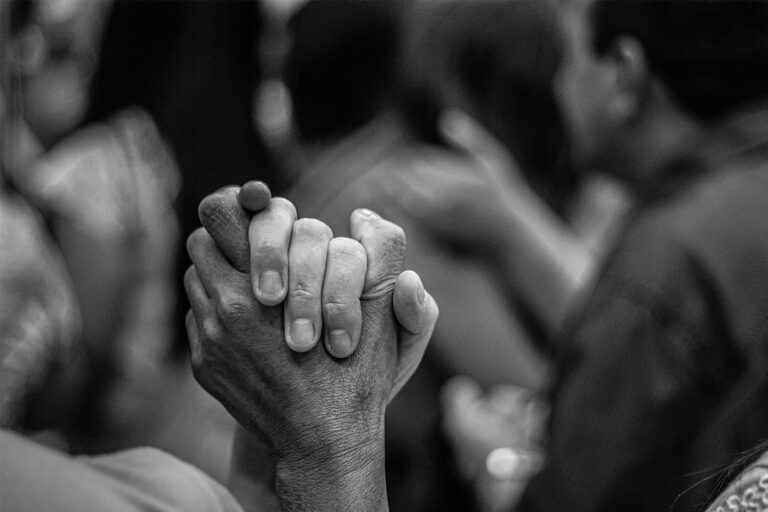
EVIDENCE
There’s the empty cross. Evidence of His love, shown when He gave His life for us. There’s the empty grave. Evidence of His victory.
And there’s the changed life. Evidence of His grace.
There’s evidence all around us. And Lord, let our lives bear witness too.t
Listen Now

by Kelvin Neil Baker
I want to talk with you today about evidence.
When you’re trying to figure out what’s true, you need something you can trust. Someone can sound convincing, but sooner or later, you have to ask, “Where’s the evidence?”
And that question can reach into your faith too.
Maybe you’ve wondered whether God loves you. Maybe something happened that you still don’t understand. Maybe you’re trying to hold on to hope while looking for a reason to believe.
Let’s bring those questions with us as we talk about Jesus. Because there’s evidence all around us.
Picture yourself sitting on a jury.
You’re listening carefully. Somebody makes a claim. Somebody tells you what they believe happened. Somebody else gives a different account.
Before you reach a verdict, you want to know one thing:
“Where’s the evidence?”
Who saw it? What happened? What supports what they’re telling me?
You wouldn’t want somebody deciding a serious case just because one person spoke the loudest. You would want them to pay attention to what is true.
Now bring that picture closer to home.
Imagine your life spread out across a table.
Here are the bills. Here is the doctor’s report. Here is the conversation you wish you could take back. Here is the prayer you’ve been praying for a long time.
Here is something you understand. And over here is something you cannot explain.
Sometimes we let our problems take up the whole table.
We keep looking at what went wrong until we struggle to remember anything else. We rehearse the disappointment. We revisit the wound. We let the hardest part of our week shape everything we believe about God.
I’m not asking you to pretend those things aren’t there.
I’m asking you to make room for something else.
Make room for the evidence of what Jesus has done.
There’s the cross.
There’s the empty grave.
There are witnesses who saw Him alive.
And there are lives His grace is still changing.
There’s evidence all around us.
We can bring honest questions to this message. Faith does not require us to pretend we have never struggled. We can acknowledge what we cannot explain while listening carefully to what Scripture does tell us.
Today, we’re going to bring three exhibits to the table.
The cross shows His love.
The empty grave declares His victory.
Changed lives bear witness to His grace.
And before we leave, the question is going to become personal.
Listen to the gospel Paul puts before us in First Corinthians, chapter fifteen, verses one through ten.
Paul is writing to a church that needs to remember the foundation of its faith. Later in this chapter, he addresses the claim some were making that there is no resurrection of the dead.
So he begins with the gospel they received.
Christ died for our sins. He was buried. He rose again. He appeared to witnesses.
Listen to what Paul gives us. There is something here for our faith to stand on.
He tells us what happened, what it means, and who saw the risen Jesus.
Christ died for our sins. That tells us why His death matters.
He was buried. His death was real.
He rose again. His resurrection is central to the gospel.
He appeared. Paul names witnesses, including himself.
And Paul connects it all to the Scriptures. We are looking at the saving work of God.
We need that foundation because feelings change. Circumstances change. The way we feel when we wake up tomorrow may be different from the way we feel right now.
Our hope needs somewhere solid to stand.
Paul directs us to Jesus.
Let’s look at the first exhibit.
The first exhibit is the cross. The cross shows His love.
There’s the empty cross.
Jesus is no longer hanging there. He was taken down. He was buried. And then He rose again. That is why we can say He lives.
So when we look at the cross, we remember what He gave.
Romans, chapter five, verses six through eight, tells us that Christ died for us while we were still sinners. God demonstrated His love toward us in the giving of His Son.
He did not wait for us to clean ourselves up.
He did not wait for us to become impressive.
He loved people who needed mercy.
That includes us.
Sometimes we understand love as something we have to keep earning. If I do enough, perhaps I will be accepted. If I never disappoint anybody, perhaps I will be worth keeping.
Then we fail, and we start wondering whether we have used up every reason to be loved.
Look at the cross.
Christ died for sinners. His love reached us in our need.
The cross shows us how serious sin is. And it shows us how far God’s love goes to save us.
Jesus gave Himself so that sinners could be forgiven and brought into relationship with God.
When I question His love, I remember the cross.
Let that settle for a moment.
When I question His love, I remember the cross.
I may still have questions about my circumstances. I may still need help understanding a painful season. But I can bring those questions to the One who has demonstrated His love.
Think about sitting across a table from somebody you love.
They are going through something hard. You cannot explain every detail. You cannot fix it with one sentence.
Sometimes the most helpful thing you can say is, “You don’t have to carry this conversation alone. I love you. I’m here.”
At the cross, we see Christ giving His life for us. His love reached all the way into our need.
His love has acted.
So when shame brings your failures to the table, remember the Savior who died for sinners.
When you are tempted to believe you must become perfect before you can come to Him, remember whom He came to save.
Bring Him the truth. Bring Him the sin you need to turn from. Bring Him the guilt you cannot remove yourself.
Grace does not ask you to hide. Grace calls you to come.
Somebody may be thinking, “But I still feel far away.”
Tell Him that. You do not need to manufacture a feeling before you pray.
You can say, “Jesus, I feel distant. Help me trust the love You have already shown me.”
That is a place to begin.
The cross belongs on the table beside your questions.
There’s evidence all around us.
But the story continues beyond the cross. Paul tells us that Christ was buried and rose again.
Let’s look at the second exhibit.
The second exhibit is the empty grave. The empty grave declares His victory.
In Luke, chapter twenty-four, verses one through twelve, the women come to the tomb carrying spices they had prepared.
They are coming to care for a body.
Their preparation shows what they expect to find.
They expect death.
But the stone is rolled away, and they do not find the body of Jesus. They hear the announcement that He has risen. They are reminded of what He had told them.
Think about what they were carrying.
They prepared for death and encountered news of resurrection.
Their love for Jesus brought them to the tomb. But their expectations did not yet match what had happened.
Sometimes we arrive at a situation with all our conclusions already packed.
We have decided what can happen. We have decided what cannot change. We have decided how the story ends.
Then we read Scripture and discover that we need to listen again.
The women needed to remember Jesus’ words.
We do too.
And they did not all understand right away. When the women reported what had happened, the apostles initially did not believe them.
The Bible lets us see their confusion. These people had difficult questions too.
And in John, chapter twenty, Thomas wants to see the risen Jesus for himself. Jesus meets him and calls him to believe.
So if you have questions, bring them honestly. Examine what Scripture says. Listen to the testimony. Seek understanding.
Remember what Paul told us. There was an empty tomb, and there were witnesses. People saw the risen Jesus. He was alive.
The tomb was empty because Jesus had risen.
The grave could receive His body. It could not hold Him forever.
His resurrection means the cross was not the end of His story.
It means Christian hope reaches beyond the grave.
It means our faith rests in a living Savior.
Later in First Corinthians, chapter fifteen, Paul explains how much depends on this. If Christ has not risen, our faith is empty and we remain in our sins. But Christ has risen, and Paul connects His resurrection to the future resurrection of those who belong to Him.
That is bigger than getting through a difficult afternoon.
It is hope for the whole of our lives, including the part we cannot see yet.
And this is where that hope meets real life.
We may still have problems tomorrow. Faithful people get sick. Christian families grieve. Resurrection hope meets us right there.
We still stand beside graves. We still miss people. We still have days when sorrow makes it hard to speak.
But because Jesus lives, grief is held within a larger hope.
Death does not have the final word for those who belong to Him.
Maybe there is an empty chair at your table.
Maybe there is somebody you wish you could call. Maybe you would give anything for one more ordinary conversation.
You do not have to apologize for missing them. Loving Jesus does not make you less human.
Resurrection hope gives you somewhere to bring that sorrow.
You can grieve before a Savior who understands death and has overcome it.
You can say, “Lord, I hurt. Help me hold on to Your promise.”
There is room for tears in faith.
There is room for questions in prayer.
And there is reason for hope because Christ has risen.
Bring that evidence to the table.
Your circumstances deserve an honest look. But they do not get to erase the resurrection.
You may not know how this season will unfold. You can still know whom you are trusting.
There’s evidence all around us.
And Paul gives us one more movement. After naming the witnesses, he starts talking about the grace of God in his own life.
That takes us to our third exhibit.
The third exhibit is a changed life. Changed lives bear witness to His grace.
Paul does something honest.
He acknowledges that he persecuted the church of God.
He does not rewrite his past to make himself look better.
Then he explains who he has become in terms of God’s grace. He describes real labor, but gives the credit to the grace of God working with him.
The man telling us about the witnesses had seen Jesus himself. And the man preaching grace had received that grace himself.
Think about his story in Acts, chapter nine. Saul is going to Damascus as a persecutor of believers. He encounters Jesus, and his life takes a different direction.
The man who opposed the name of Jesus begins proclaiming Him.
Jesus changes the direction of his whole life.
And Christ still changes people.
Second Corinthians, chapter five, verse seventeen, describes the person in Christ as a new creation. This new life comes from belonging to Him.
We cannot earn salvation by improving our behavior. Salvation comes through Jesus. We receive His grace, and that grace begins reshaping how we live.
Our hope rests on Jesus’ death and resurrection, and on the testimony of those who saw Him alive. Today, changed lives bear witness to His continuing work.
But when His grace takes hold of a life, it has consequences.
Sometimes the change is dramatic. Sometimes it becomes visible through ordinary obedience repeated over time.
A person who always blamed somebody else begins taking responsibility.
A person who hid the truth begins speaking honestly.
A person who kept a list of offenses begins learning forgiveness.
A person who used anger to control the room begins learning patience.
A person who lived only for themselves begins caring about somebody else’s needs.
These things may never make a headline.
But they matter around a kitchen table.
They matter in a marriage. They matter to a child. They matter at work when everybody is tired and the day has gone wrong.
Galatians, chapter five, verses twenty-two and twenty-three, describes the fruit of the Spirit in terms that include love, patience, kindness, faithfulness, gentleness, and self-control.
That gives us something concrete to examine.
Does the way I treat people show that I am learning to follow Jesus?
Imagine the people closest to you sitting around the table.
They know how you speak when you’re frustrated. They know what happens when somebody disagrees with you. They know whether your apologies come with excuses attached.
What evidence of grace can they see?
And I have to ask myself that question too. We all need to bring our lives before the Lord.
We can say the right words in public and still have places that need surrender in private.
The answer is to come honestly to Christ and obey Him in the place that needs to change.
Maybe your next step is an apology without defending yourself.
Maybe it is telling the truth when a lie would be convenient.
Maybe it is asking for help with a habit you have kept hidden.
Maybe it is choosing a gentle response when you feel entitled to a harsh one.
These are places where grace becomes visible.
My past is part of my story. Jesus is changing its direction.
Paul did not deny his past. He also did not make his past the whole story.
God’s grace was at work.
If you are ashamed of where you have been, hear that clearly. You cannot undo your past. You can bring it to Jesus, receive His mercy, and take the next faithful step.
That may include making amends. It may include consequences. It may include patient rebuilding of trust.
Grace gives you a reason to move toward what is right.
There’s evidence all around us.
And now the evidence thread reaches our own lives.
We started by asking, “Where’s the evidence?”
We brought the cross to the table.
We brought the empty grave to the table.
We listened to the witnesses.
We watched Paul describe what grace had done in him.
Now there is a question sitting in front of each of us:
What evidence of Jesus is in you?
What is His grace doing in your actual life? In your home? In your relationships? In the way you treat people when the day has gone wrong?
Where is love growing?
Where are you turning from sin?
Where are you learning to forgive?
Where are you becoming willing to obey?
And if there is an area where you know you are resisting Him, what would surrender look like today?
Listen carefully. You cannot earn salvation by showing enough evidence of change. The cross tells us that we need a Savior. We come to Jesus because we need His grace.
But the grace that welcomes us also teaches us to follow Him.
So the question becomes an invitation to come closer and respond.
There may be somebody who has spent years collecting reasons they could never be forgiven.
You can name the mistakes. You can remember the words. You can still see the faces of people you hurt.
You have looked at that evidence until shame has become the only voice you hear.
Bring the cross to that table.
Christ died for sinners.
Bring the resurrection to that table.
Jesus lives.
Bring Paul’s testimony to that table.
God’s grace changed a persecutor into a servant of Christ.
Your sin is real. So is the Savior’s mercy.
You can stop hiding and come to Him.
If you have never trusted Jesus, start there.
Come with your own story. Come with your own need.
Come honestly.
Confess your need. Turn from sin. Trust Jesus Christ, who died for our sins and rose again.
And if you already belong to Him, bring Him the place that needs surrender.
Ask, “Lord, what is the next faithful step?”
Then take it.
If you need to apologize, speak to that person.
If you need to tell the truth, tell it.
If you need help, reach out to a trustworthy believer or pastor who can walk with you.
If you need to open your Bible again, begin with First Corinthians, chapter fifteen. Remember the gospel Paul puts before us.
Start with what the Lord is showing you now. Take that next faithful step.
The people around your table may begin to see grace in a sentence you once would never have said:
“I was wrong.”
“Will you forgive me?”
“Let me help.”
“I’m listening.”
Those words can become part of a life that bears witness.
Maybe it was the cross that spoke to your heart today.
Maybe you needed to remember how much Jesus loves you.
Maybe it was the empty grave. You have been carrying sorrow, and you needed to remember that death does not have the final word for those who belong to Him.
Or maybe it was that question.
What evidence of Jesus can people see in me?
And your prayer is, “Lord, I want Your grace to shape more of my life.”
More of Your love in the way I speak.
More of Your forgiveness in the way I respond.
More of Your Spirit working through me.
More of Jesus that people can see.
If the Word of God has spoken to your heart, this is a moment to respond.
Wherever you are listening, you can turn to Jesus right where you are. You can pray. You can ask for His mercy. And if you need someone to pray with you, reach out to a pastor or a trustworthy believer.
Maybe you need to trust Jesus for the first time. Come honestly. Tell Him you need His mercy. Turn from sin and trust the Savior who died for you and rose again.
Maybe you belong to Him, but you have drifted away. Bring Him the truth. Bring Him the place that needs surrender.
Maybe you need comfort in your grief. Bring your sorrow to the risen Savior.
Maybe your prayer today is simply, “Jesus, make my life evidence of Your grace.”
Then let that be your prayer.
He is still saving. He is still forgiving. He is still changing lives.
And as His grace changes you, your life can become another testimony to what He is doing.
Come pray. Come surrender. Come back to Him. Come meet Jesus.
Lord, let my life be evidence.
Let my family see Your love in me.
Let my children see Your grace in me.
Let my coworkers see Your patience in me.
Let the people who knew me before see the change You are making now.
Let there be evidence that Jesus has been here.
When I question His love, I remember the cross.
When I face death, I remember His resurrection.
When my past weighs on me, I remember the grace that changed Paul.
And when I wonder how to live tomorrow, I ask Jesus to shape my next step.
There’s the empty cross. Evidence of His love, shown when He gave His life for us.
There’s the empty grave. Evidence of His victory.
And there’s the changed life. Evidence of His grace.
There’s evidence all around us.
And Lord, let our lives bear witness too.
Let’s pray.
Jesus, thank You for loving us while we were still sinners. Thank You for giving Your life for our sins and rising again.
We bring You our questions, our sorrow, our shame, and the places where we have resisted You.
Forgive us. Help us turn from sin and trust You. Teach us to receive Your grace and follow You honestly.
For the person who is grieving, give comfort and resurrection hope.
For the person who feels far away, help them come to You.
For the person who needs to make something right, give courage to take that step.
Shape our words, our choices, and our relationships. Let Your love become visible in how we treat the people closest to us.
Keep changing us, Lord. Let our lives bear witness to Your grace.
In Jesus’ name, amen.