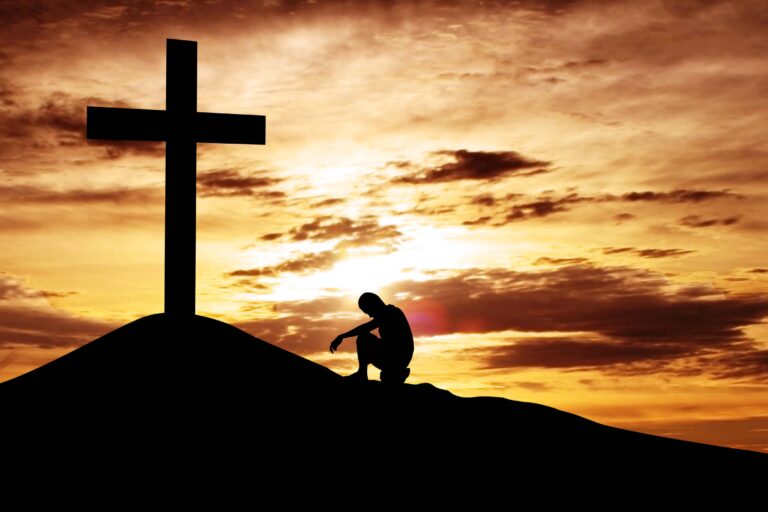
The Setback Before the Comeback
When Life Pushes You BackwardThere are moments in life when it feels like everything is finally moving forward.You are gaining ground. Things are coming together. You are beginning to believe again.Then something happens.
One phone call. One mistake. One disappointment. One closed door. One unexpected problem.
Suddenly, what felt like forward progress becomes a setback.
A setback is one of those moments when life takes you somewhere you never planned to go. It can leave you asking:
by Kelvin Neil Baker
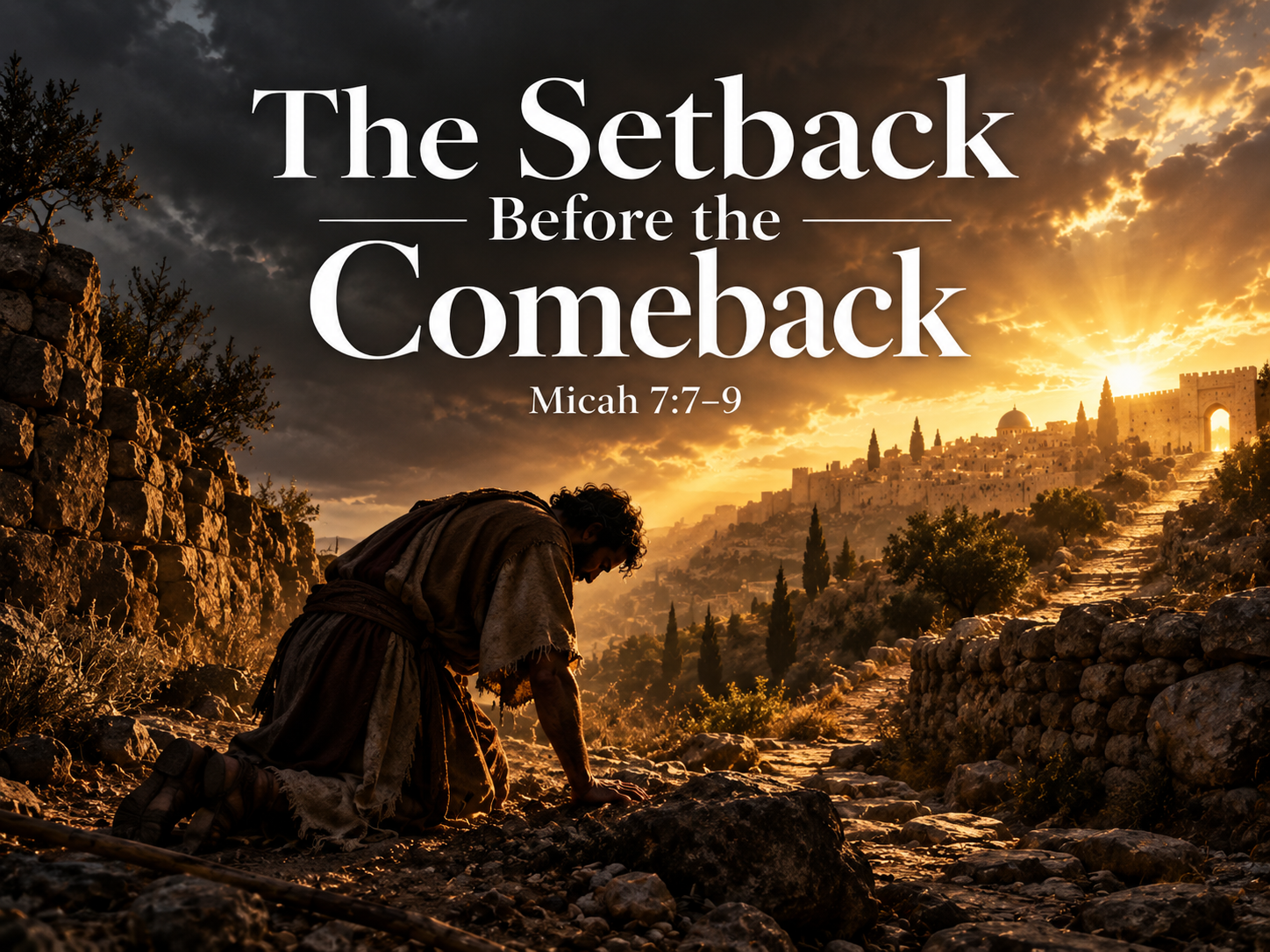
The Setback Before the Comeback
Main Scripture: Micah 7:7–9
Speaker: Kelvin Neil Baker
Topic: Setbacks, Faith, Restoration, Perseverance, Resurrection, Hope
When Life Pushes You Backward
There are moments in life when it feels like everything is finally moving forward.
You are gaining ground. Things are coming together. You are beginning to believe again.
Then something happens.
One phone call. One mistake. One disappointment. One closed door. One unexpected problem.
Suddenly, what felt like forward progress becomes a setback.
A setback is one of those moments when life takes you somewhere you never planned to go. It can leave you asking:
“How did I end up back here?”
“Why am I fighting this again?”
“Why did God allow this?”
“I thought this season was over.”
The danger is that a setback can make us interpret a temporary position as a permanent destination.
We start believing:
“This is how my story ends.”
“I will never recover.”
“I ruined everything.”
“Nothing is going to change.”
But Scripture gives us another perspective.
Down doesn’t mean done.
You may have lost ground, but you have not necessarily lost purpose.
You may have fallen, but falling is not the same thing as finishing.
Sometimes there is a setback before the comeback.
Micah Saw Darkness, but He Expected Light
Micah 7 describes a deeply troubled time.
There was corruption, broken trust, spiritual decline, and division. Micah did not pretend the situation was better than it really was.
That is important because biblical faith does not require us to deny reality.
Faith does not mean saying:
“It doesn’t hurt.”
“I didn’t fall.”
“I didn’t lose anything.”
Faith can look straight at the darkness and still decide where to look next.
In Micah 7:7, the prophet declares that he will look to the Lord and wait for the God of his salvation.
Then Micah 7:8 carries this powerful truth: though he has fallen, he will rise. Though he sits in darkness, the Lord will be his light.
Notice what Micah does not say.
He does not say, “I never fell.”
His confidence is that he will rise.
There are testimonies where God keeps us from falling, and we should thank Him for those.
But there are also testimonies that sound like this:
“I fell, but God did not leave me there.”
“I made a mistake, but mercy met me.”
“I walked through darkness, but the darkness did not get the final word.”
“I lost something, but I did not lose God.”
That is why we must remember:
Down doesn’t mean done.
A Setback Is a Position, Not a Prophecy
Micah was sitting in darkness.
That was his current position.
But his expectation was still that God would be his light.
You can acknowledge where you are without agreeing that you will always remain there.
You can say:
“Yes, I am hurting,” without saying, “I will always hurt.”
“Yes, I failed,” without saying, “I am a failure.”
“Yes, I lost something,” without saying, “My life is over.”
“Yes, this season is dark,” without saying, “The light will never return.”
Sometimes we allow one season to rename us.
We experience rejection and begin to call ourselves rejected.
We fail and begin to call ourselves failures.
We go through disappointment and begin to assume disappointment is now our destiny.
But the Bible repeatedly shows people who experienced setbacks without allowing those setbacks to become their permanent identity.
Proverbs 24:16 teaches the principle that the righteous may fall, yet rise again.
The power is not always in never falling.
Sometimes the testimony is in getting back up.
Your current position does not have to become your final prophecy.
Be careful about calling something permanent that God may only call temporary.
Be careful about calling something finished while God is still writing.
Failure Does Not Have to Cancel Your Calling
Peter knew what it was like to fail.
He boldly declared that he would stand with Jesus.
Then pressure came.
Fear came.
And Peter denied knowing Jesus three times.
Imagine the weight Peter must have carried afterward.
It is one thing when someone else believes you failed.
It is another thing when you know you failed.
You replay what you said.
You replay what you did.
You tell yourself:
“I knew better.”
“I should have handled that differently.”
“If I could go back, I would change it.”
Then shame begins preaching.
Shame says:
“That is who you really are.”
“God cannot use you now.”
“You had your chance.”
“Your setback canceled your future.”
But John 21 gives us another picture.
Jesus meets Peter again.
Jesus restores Peter.
Jesus recommissions Peter.
The same Peter who denied Jesus became one of the central voices in the early church.
Peter’s failure was real, but failure did not get the authority to write his final chapter.
That is important for us.
Repent where repentance is needed.
Own what needs to be owned.
Make right what you can make right.
Learn what needs to be learned.
But after repentance, do not keep arguing with grace.
There comes a point when constantly rehearsing forgiven failure stops being humility and begins becoming disbelief in the restoring power of Jesus.
Your failure may explain your setback, but it does not have to cancel your comeback.
God Can Work Through What Pushed You Backward
Joseph also understood setbacks.
He had a dream, then found himself in a pit.
He carried promise, then became a slave.
He tried to live faithfully, then faced false accusation.
After that came prison.
If you measured Joseph’s life only by circumstances, it looked like everything was moving in the wrong direction.
Dream.
Pit.
Slavery.
Prison.
That was not the route Joseph would have chosen.
But later, Joseph could tell his brothers in Genesis 50:20 that what they intended for evil, God used toward good.
That does not mean the evil was good.
The betrayal was still wrong.
The pit still hurt.
The false accusation was still false.
The prison was still prison.
We do not have to call evil good in order to believe God can bring good out of it.
God is able to take something He did not approve of and still refuse to let it waste your life.
What they meant to stop you, God can use to shape you.
What they meant to bury you, God can use to prepare you.
What looked like a setback can become part of the road toward your comeback.
Romans 8:28 does not teach that everything that happens is good.
It teaches that God works through all things for the good of those who love Him and are called according to His purpose.
That means God can work in disappointment.
God can work in delay.
God can work in loss.
God can work in rejection.
God can work in seasons you still do not understand.
What pushed you back cannot push God out.
Do Not Judge Your Story Too Early
Maybe the setback looks like the end because you are judging the story in the middle.
Think about Joseph in the pit.
If you stop there, it looks like tragedy.
Think about Peter immediately after denying Jesus.
If you stop there, it looks like failure.
Think about Israel standing before the Red Sea.
If you stop there, it looks like they are trapped.
Think about Jesus hanging on the cross.
If you stop there, it looks like defeat.
But you cannot understand the whole story if you stop reading too soon.
Some of us are trying to write the conclusion while we are still in the middle of the chapter.
We say:
“It is over.”
But God says:
“Keep reading.”
We say:
“I lost.”
Keep reading.
“They buried me.”
Keep reading.
“I fell.”
Keep reading.
The setback does not prove God abandoned the story.
Sometimes the setback is the chapter where we discover that our confidence was never supposed to rest in how smoothly the story was going.
Our confidence is in the Author.
And if God is still writing, the chapter does not get to choose the ending.
Friday Looked Like the End
The Gospel itself is the greatest reminder that what looks finished may not actually be finished.
Friday looked like defeat.
Jesus was arrested.
He was rejected.
He was crucified.
He died.
His body was placed in a tomb.
A stone was rolled in front of it.
To the disciples, everything looked over.
Their Teacher was dead.
Their plans were shattered.
Their hope looked buried.
Friday said, “It is over.”
Then came Saturday.
Saturday was silent.
There was no visible miracle.
No obvious movement.
No explanation.
Some seasons of life feel like Saturday.
You prayed, but nothing seems to move.
You believed, but nothing seems to change.
You obeyed, but heaven seems quiet.
Friday hurts.
Saturday confuses us.
But Sunday teaches us something powerful:
Silence is not the same thing as absence.
The disciples thought the story was over.
God was not finished.
Luke 24 records the women coming to the tomb and discovering that Jesus had risen.
The cross was real.
The grave was real.
The stone was real.
But none of them were final.
The greatest comeback in history came after what looked like the greatest setback.
The cross looked like defeat, but became victory.
The grave looked like the end, but became evidence.
The stone looked like closure, but became a testimony.
Because Jesus rose from the grave, Christians know that death itself does not get the final word.
What Should You Do in a Setback?
Do Not Make Permanent Decisions From Temporary Pain
Pain speaks loudly.
Fear speaks quickly.
Disappointment wants immediate answers.
But do not allow a temporary season to make permanent decisions for you.
Pray.
Wait.
Seek wisdom.
Stay in Scripture.
Talk to mature people who love God and love you enough to tell you the truth.
Do not throw away tomorrow simply because today hurts.
Learn What the Setback Can Teach You
Ask God:
“What are You forming in me?”
“What needs to change?”
“What do I need to see?”
“What have I been depending on besides You?”
“What wisdom should I carry into the next season?”
A setback does not automatically make us stronger.
But a setback surrendered to God can teach us things comfort never could.
Keep Getting Up
Micah’s confidence was not, “I never fall.”
His confidence was, “I will rise.”
For some people, the comeback begins with something small.
Praying again.
Opening the Bible again.
Going back to church.
Making the phone call.
Apologizing.
Trying again.
Applying again.
Trusting again.
Believing again.
You do not have to see the whole comeback to take the next step.
Maybe You Are in the Middle Right Now
Maybe your setback has lasted longer than you expected.
Maybe you are tired.
Maybe you do not need another quick answer.
Maybe you simply need to remember that God has not forgotten where you are.
Micah could sit in darkness and still know where his light would come from.
Sometimes faith is not celebrating because everything has changed.
Sometimes faith is sitting in the dark and whispering:
“Jesus, I still trust You.”
Your comeback is not built on your emotional strength.
It is built on the faithfulness of God.
Down Does Not Mean Done
If you have been defining your whole life by one setback, it is time to remember who gets the final word.
You lost something.
You made a mistake.
You got hurt.
You were rejected.
You were delayed.
You fell.
But down doesn’t mean done.
A pit could not stop Joseph.
Failure could not finish Peter.
Darkness could not silence Micah’s hope.
The Red Sea could not stop Israel.
And a sealed tomb could not hold Jesus.
Your setback is real.
But your setback is not sovereign.
Your pain is real.
But your pain is not sovereign.
Your failure is real.
But your failure is not sovereign.
Jesus is Lord.
Sometimes there really is a setback before the comeback.
Do not quit in the setback.
Do not surrender in the setback.
Do not bury your faith in the setback.
Do not call the story finished while God is still writing.
The setback does not get the final word.
Jesus does.
The Gospel
Our greatest problem was never merely disappointment, failure, or loss.
Our deepest problem was sin.
Sin separated us from God, and we could not rescue ourselves.
But Jesus came.
He lived without sin.
He went to the cross.
He died for our sins.
He was buried.
And He rose again.
The Gospel is not simply, “Try harder and create your own comeback.”
The Gospel is that Jesus did for us what we could never do for ourselves.
Our hope is not self-improvement.
Our hope is a risen Savior.
If you have never trusted Jesus, you can turn from sin, place your faith in Christ, receive His grace, and follow Him.
And if you are a believer who has fallen, drifted, or given up hope, remember:
You can come back.
Jesus is still calling.
Key Takeaways
- A setback is a position, not a prophecy.
- Failure does not automatically cancel calling.
- God can work through circumstances we would never choose.
- Do not judge the whole story from the middle of the chapter.
- Silence does not mean God is absent.
- You do not need to see the whole comeback to take the next faithful step.
- The resurrection proves that what looks finished may not actually be finished.
Reflection Questions
- Have you allowed a temporary setback to become a permanent label?
- Is there a failure you need to repent of and then finally release to God’s grace?
- What might God be teaching you in your current season?
- What is one faithful step you can take today instead of waiting to see the entire comeback?
Call to Action
Do not make permanent decisions based on temporary pain.
Bring your setback to God.
Learn what you can learn.
Repent where you need to repent.
Trust where you cannot understand.
And take the next faithful step.
Down doesn’t mean done.
Sometimes there is a setback before the comeback.